Want to see RevSure in action
Schedule a demo now
Book a Demo
As we begin a new year, we wish you a strong start to 2026 and a year of clarity, confidence, and impact for your GTM organization.
Part 1 of our 2026 GTM Outlook explored the structural shift already underway: GTM moving from reactive reporting to predictive, signal-led systems. Part 2 looks at what happens once that foundation is in place. In 2026, differentiation won’t come from better forecasts alone; it will come from how teams act on them. This is the year predictive intelligence turns into autonomous execution. AI systems move beyond surfacing insights to actively reallocating budgets, reprioritizing accounts, and correcting pipeline risk in real time. Buyers become increasingly AI-assisted, decisions become continuous, and GTM platforms evolve from planning tools into operating systems for growth.
Gartner’s 2026 Strategic Technology Trends point to a shift most GTM teams are underestimating: enterprise systems are no longer designed to support decisions; they’re being built to make them. AI-native platforms and multi-agent systems increasingly reason, coordinate, and act inside operational workflows.
For GTM leaders, this changes the nature of execution. Planning cycles, dashboards, and manual prioritization can’t keep pace with environments where decisions are continuous and machine-mediated. Budget allocation, account focus, and pipeline risk are increasingly optimized algorithmically, often outside traditional human review loops. The implication for 2026 is structural.
As decision-making moves into systems, leadership shifts from making choices to designing the objectives, constraints, and visibility that govern how those choices are made. Teams that don’t adapt won’t fall behind on insight, but on execution.
IBM’s 2026 outlook reinforces a critical reality: AI is no longer experimental. Agentic systems are being trusted to act inside core workflows, with real impact on budgets, prioritization, and customer experience.
IBM’s research is clear on the constraint. Autonomous execution only works when data is trusted, access is governed, and decisions are explainable. Near real-time data, clear rules for delegation versus human review, and strong data policy are now prerequisites, not nice-to-haves.
Just as importantly, trust extends beyond the enterprise. Customers are increasingly willing to engage with AI-driven interactions, but not with opacity. Transparency in how data is used and when AI is involved becomes a product requirement. In 2026, speed alone won’t differentiate GTM teams. Those that pair autonomy with accountability will.
As GTM execution becomes increasingly autonomous, the economics behind it change. By 2026, success will be defined less by growth-at-all-costs and more by measurable efficiency and defensible outcomes. When systems plan, prioritize, and act in real time, leadership focus shifts from tracking activity to holding results accountable.
Budgets are no longer evaluated on spend levels or channel output alone. They are judged on their ability to produce a predictable pipeline, absorb volatility, and adapt dynamically as conditions change. In this environment, trust becomes a gating factor. As systems reallocate resources, reprioritize accounts, and surface risk, leaders must be able to understand why decisions were made and how value is being created.
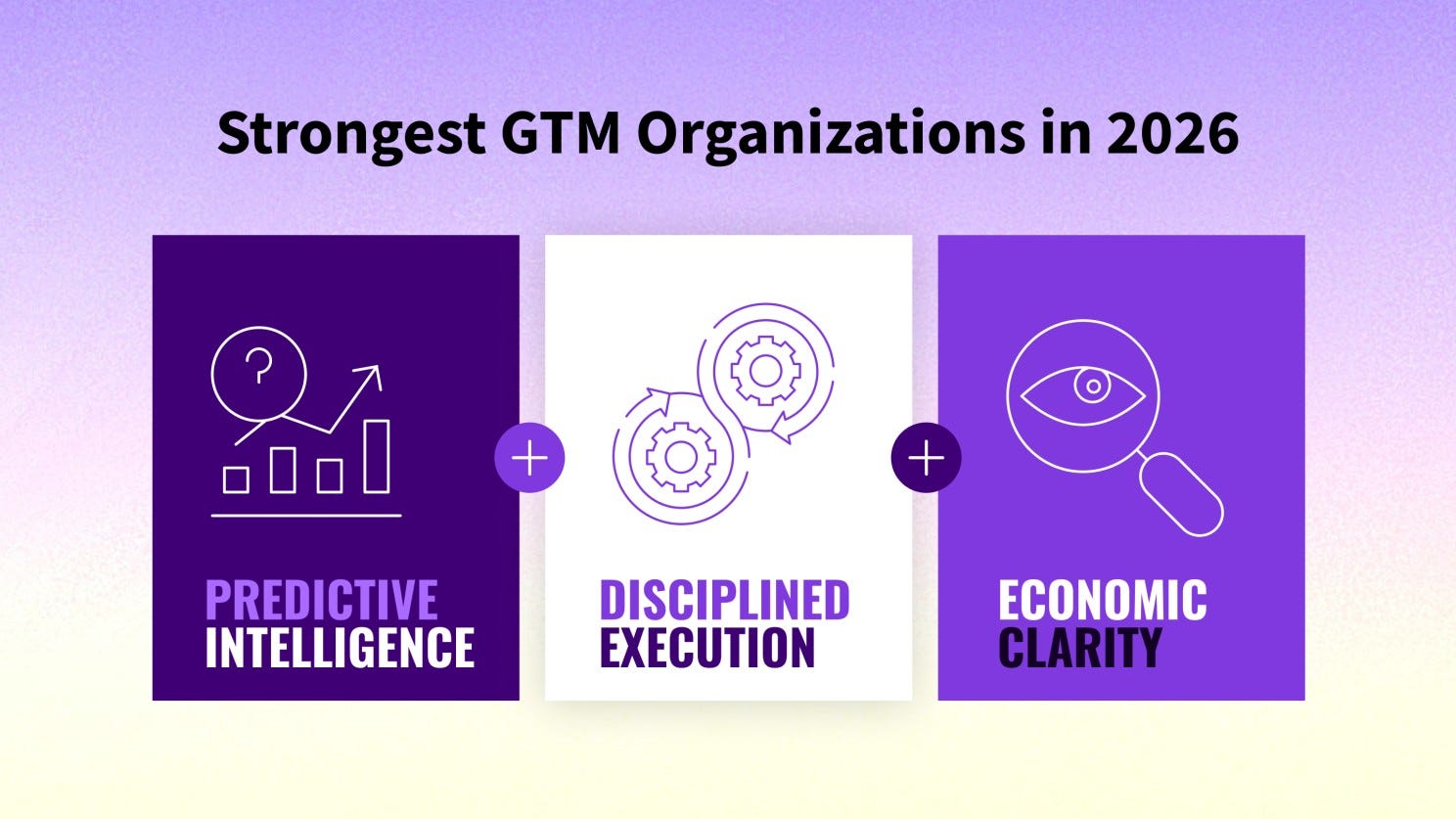
The strongest GTM organizations in 2026 won’t be those with the most automation. They’ll be the ones that combine predictive intelligence, disciplined execution, and economic clarity into systems leaders can trust, defend, and scale.
As GTM execution moves from prediction to autonomous action, the limiting factor isn’t AI capability; it’s control. When decisions are made continuously by systems, teams need shared context, economic clarity, and clear governance to act with confidence.RevSure is built to serve as the control layer for autonomous GTM. Rather than optimizing isolated moments in the funnel, RevSure connects predictive intelligence, execution signals, and revenue outcomes into a single decision system that leaders can trust. Attribution, MMX, pipeline health, journey intelligence, and projections operate together, ensuring that automated actions are grounded in economic impact, not just activity.
In practice, this means predictive signals don’t stop at insight. Mix models inform real-time budget reallocation, pipeline projections surface risk early enough to intervene, and journey readiness provides the context autonomous systems need to prioritize responsibly and explain decisions. Governance is designed in, not bolted on, so leaders maintain visibility into why actions occur and how outcomes are produced.
As organizations adopt autonomous execution models in 2026, advantage shifts to those that can balance speed with accountability. RevSure provides the foundation to design, operate, and scale GTM systems that act with precision and remain defensible as decisions accelerate.

Control only matters if it translates into action. As GTM systems become autonomous, the real test is whether predictive signals can be activated quickly, consistently, and responsibly across the funnel. In this blog, RevSure shows how specialized GTM Agents operate within this control layer to turn fragmented buyer signals into coordinated execution. Instead of waiting on dashboards or manual handoffs, agents detect intent, decide next-best actions, and execute in real time. The result is GTM execution that’s faster, more consistent, and accountable by design, where every action can be traced back to its signals, logic, and economic impact.
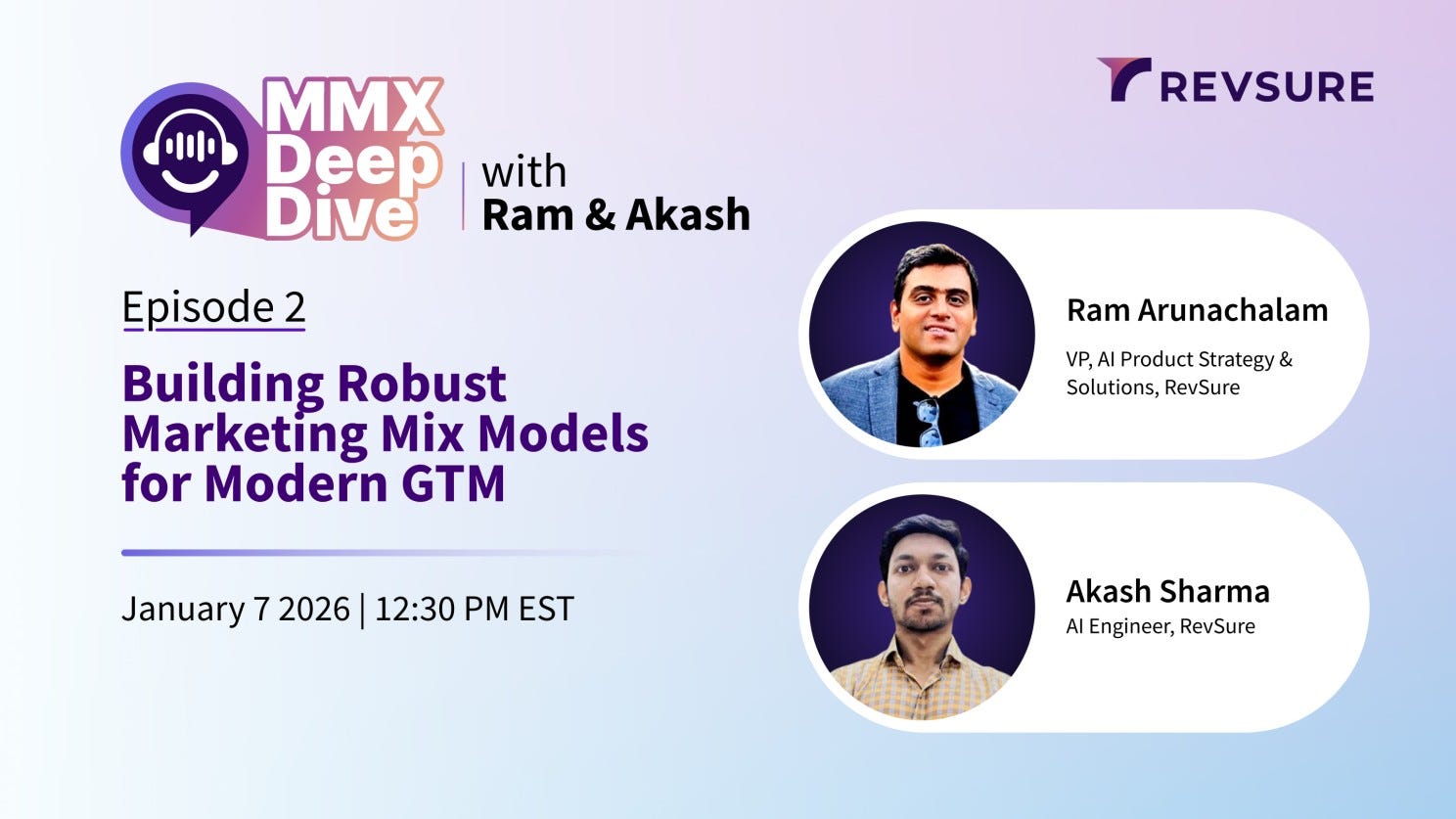
As GTM systems move toward autonomous execution, understanding where incremental spend actually drives outcomes becomes critical. In this upcoming MMX Deep Dive, RevSure walks through how modern marketing mix models are built for today’s GTM complexity, from signal engineering and response curves to calibration and validation.
You’ll see how MMX feeds predictive projections and powers continuous decision loops across spend allocation, pipeline forecasting, and execution. This session is designed for teams preparing to connect MMX, autonomous execution, and predictive GTM systems into a single operating model.
—
2026 marks a clear inflection point for GTM. Across this series, we’ve traced the progression from reactive reporting to predictive intelligence, and now from prediction to autonomous execution.
The winners won’t be defined by the number of tools they deploy, but by how well their systems sense change, reason in context, and act with precision. As buyers become AI-assisted and execution becomes increasingly automated, GTM leadership shifts from managing activity to designing systems that can be trusted to run.
The future of GTM isn’t coming; it’s already running.