Want to see RevSure in action
Schedule a demo now
Book a Demo
AI SDRs are no longer experimental. Sales agents can now research accounts, draft hyper-personalized emails, trigger sequences, follow up across channels, and even qualify responses. The question is no longer whether AI can participate in outbound.
It’s how much of the outbound engine it can reliably replace. This issue explores the emerging boundary between automation and human judgment in outbound GTM, and why the future of pipeline isn’t AI versus humans, but AI orchestrated by humans.
Over the past few years, the AI SDR category has rapidly matured and attracted significant investment. According to MarketsandMarkets research, the global AI SDR market is projected to grow from around USD 4.1 billion in 2025 to over USD 15 billion by 2030, representing a CAGR of nearly 30 %, an indicator of strong demand for AI-powered sales development tools and automation. This expansion is driven by the appeal of AI SDR tools that automate and scale core sales development tasks, such as research, personalization, multi-channel outreach, and follow-up, enabling teams to engage more prospects than human SDRs could handle manually.

This trend reflects a broader shift in go-to-market operations: sales leaders are no longer debating whether AI belongs in outbound workflows, but how to integrate AI in ways that connect automation to real revenue impact.
However, while AI SDRs scale activity, achieving meaningful pipeline conversion and revenue outcomes depends on how tightly these tools are aligned with full-funnel context, buying signals, and human judgment.
AI SDRs are proving they can meaningfully enhance outbound performance. They reduce research time, accelerate personalization, maintain perfect follow-up consistency, and ensure no lead is left untouched. In many organizations, they’re already increasing speed-to-engagement and expanding total coverage across target accounts. But, the more important question is how that execution connects to pipeline quality and revenue outcomes.
Outbound has always required two dimensions: scale and judgment. AI excels at scale. It thrives in structured workflows and repeatable processes. It can operate continuously, apply consistent logic, and respond faster than any human team. Human sellers, on the other hand, excel in moments that require interpretation- reading between signals, navigating buying group dynamics, and building trust in complex conversations.
The most effective outbound engines are not choosing between the two. They are intentionally combining them.
As AI SDR tools mature, leading GTM teams are discovering that performance improves when agents operate within full-funnel context. When outreach is informed not just by ICP fit, but by buying signals, engagement patterns, and pipeline health, AI-driven execution becomes more precise. Instead of simply increasing activity, it aligns activity with revenue logic. This is the evolution underway in outbound today.
AI SDRs are not eliminating the human role. They are reshaping it, shifting humans toward higher-leverage conversations, while automation handles structured execution.
Gartner predicts that by 2028, AI agents will outnumber human sellers tenfold. Yet fewer than 40% of sellers are expected to report that those agents improved their productivity. The takeaway isn’t that AI lacks potential. It’s that scale alone doesn’t create value.
As AI agents become ubiquitous, simply layering more automation onto complex sales workflows can overwhelm teams rather than empower them. Real productivity gains will depend on disciplined data foundations, streamlined processes, and thoughtful integration into cohesive GTM strategies.
Forrester’s research echoes a similar theme: AI agents are reshaping B2B go-to-market teams by augmenting workflows, not replacing sellers. When embedded thoughtfully into prospect prioritization, engagement sequencing, and early qualification, AI agents can significantly elevate performance. But their impact depends on context, how well they are aligned to business logic, buying signals, and cross-functional workflows.
The organizations seeing meaningful gains aren’t treating AI as a standalone automation layer. They are redesigning their GTM systems so human expertise and AI execution operate in sync.
RevSure’s SDR Agent is built to do more than automate outreach. It autonomously identifies high-intent accounts, engages them with context-aware messaging, and qualifies signals into pipeline, operating continuously and informed by real buyer behavior. Unlike traditional outbound tools that only see a lead record or email thread, the RevSure SDR Agent operates with full-funnel visibility. It understands website activity, campaign engagement, ICP fit, CRM history, and buying group dynamics, ensuring execution is driven by revenue context, not just activity volume.
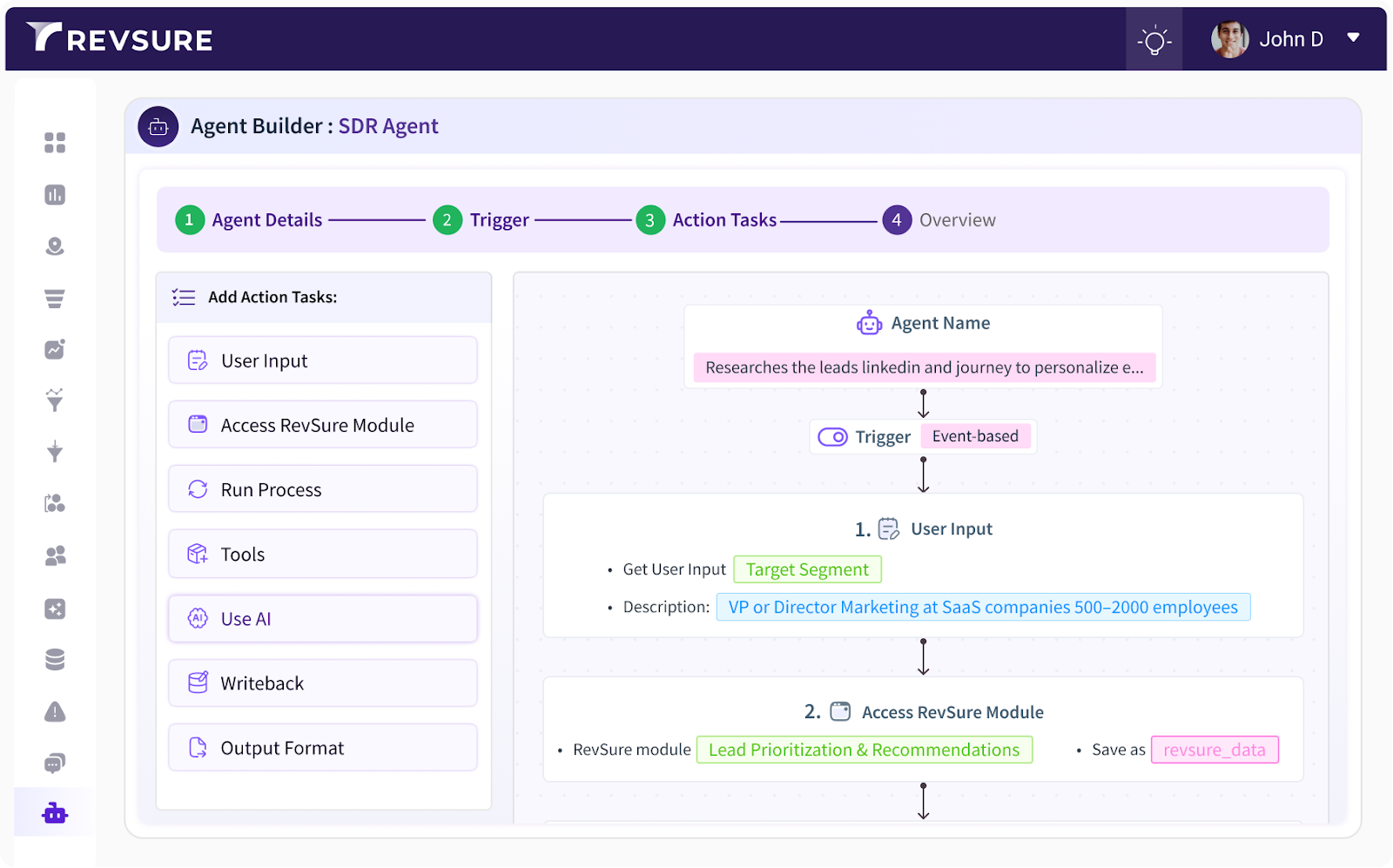
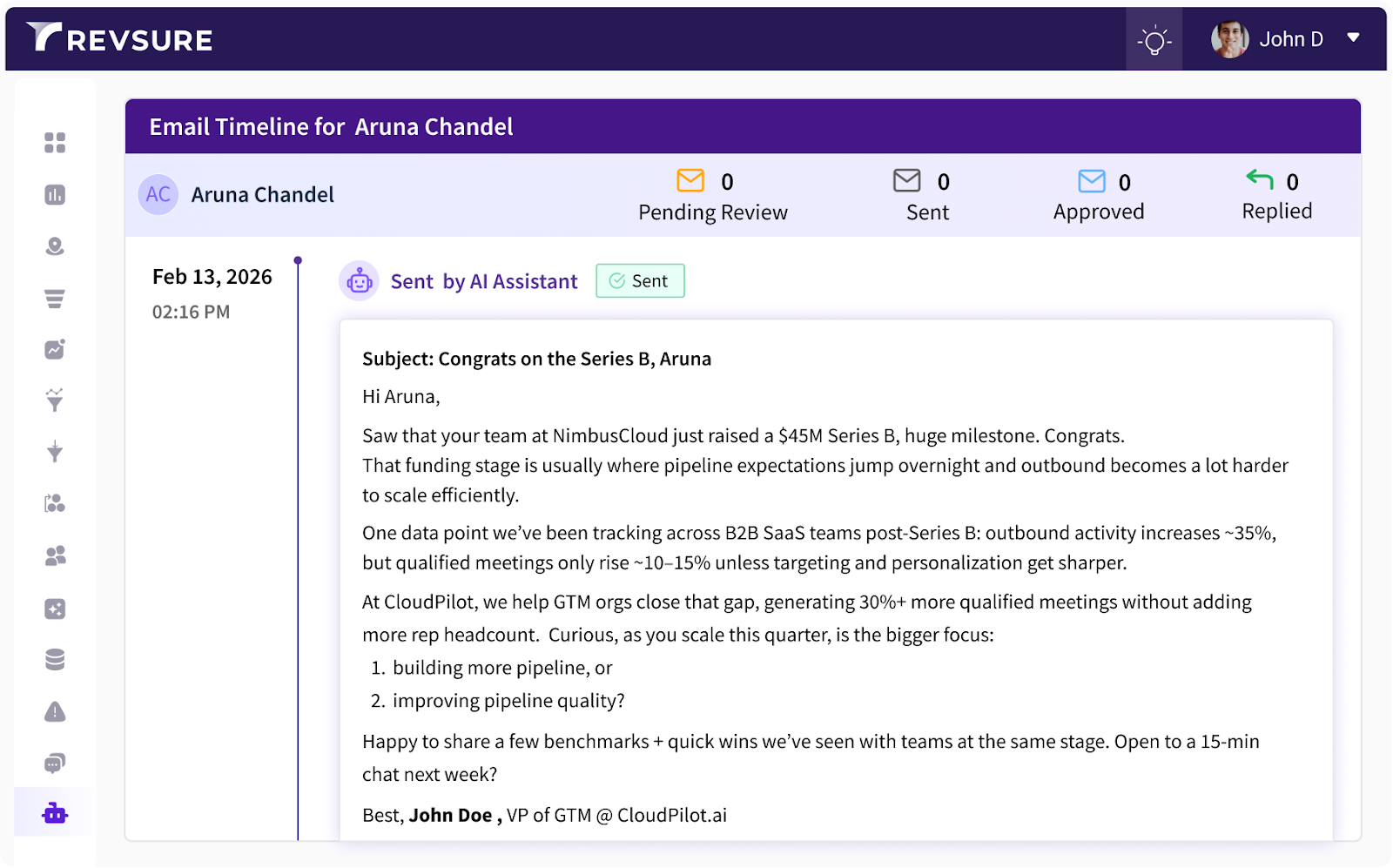
The future of GTM is not a single AI SDR. It’s a coordinated system of AI agents working across marketing, sales, pipeline, and revenue operations. RevSure’s Agent Hub brings together context-aware agents that analyze, decide, and act across the entire funnel, from anonymous visitors to closed-won deals and renewals.
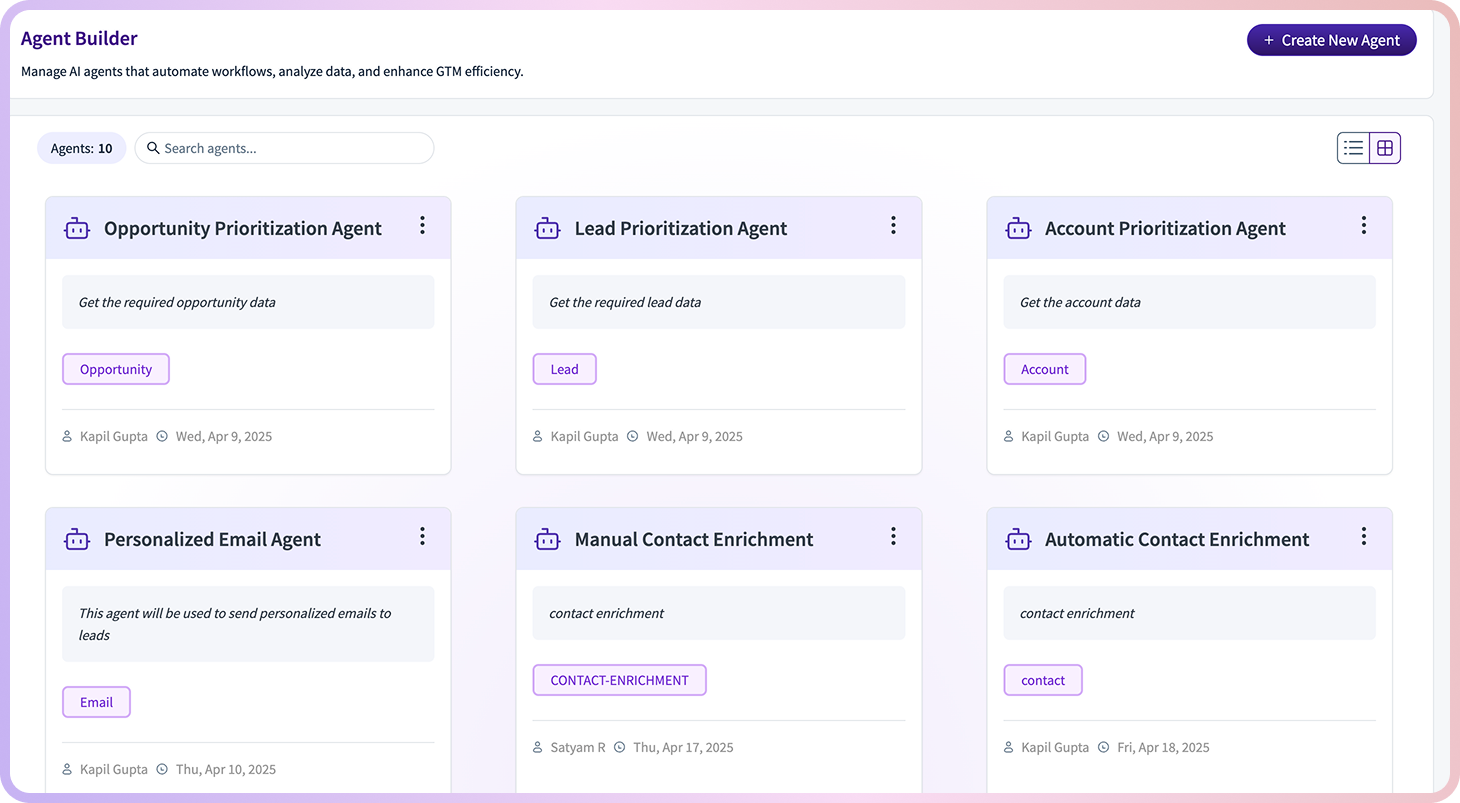
Powered by RevSure’s B2B GTM Data Graph and enterprise-grade guardrails, every agent operates with shared intelligence and secure autonomy, turning fragmented automation into orchestrated execution.
AI SDRs are changing the operating model of pipeline generation. In AI Assistants Are the New SDRs, we explore how always-on AI agents are replacing manual prospecting with intelligent, scalable engagement systems that can run hundreds or thousands of conversations a day. Early adopters are already reporting meaningful impact, including 3–5× higher productivity and 25–40% lower cost per meeting booked.
But the bigger shift goes beyond outbound automation. The future isn’t a standalone AI SDR. It’s agentic GTM systems: coordinated networks of AI agents working across marketing, sales, and RevOps to drive predictable, full-funnel growth.
Missed the live session? The recording is now available on demand. In this technical deep dive, Babilu and Aditya introduce RevSure Reli Chat, the GenAI-powered interaction layer built on RevSure’s Full-Funnel Context Data Platform. Reli combines large language models, structured GTM intelligence, and deterministic revenue models to turn natural language questions into accurate, business-ready insights.
March 3, 2026 | 11:00 AM EST
Enterprise B2B spend optimization is complex, with budgets split across regions, channels, segments, and long-cycle funnel motions. Traditional MMX provides contribution estimates, but leaders need decision intelligence: optimization systems that translate model outputs into actionable investment shifts under real business constraints. In this MMX Deep Dive, Ram will show how RevSure operationalizes marketing mix modeling as a governed optimization engine for enterprise GTM spend strategy, aligning allocation decisions with pipeline coverage, ACV goals, and capacity constraints.
.jpg)
AI SDRs won’t eliminate outbound teams. They will eliminate poorly designed outbound systems. The next generation of revenue engines will not be built on replacing humans with agents, but on assigning each to what they do best: machines for scale and structure, humans for nuance, trust, and judgment. In the future of outbound, intelligence scales through AI. Revenue scales through orchestration.